- Published on
Best Espresso Machines Under $50 in 2026: Top 3 Budget-Friendly Picks Compared
- Authors
- Name
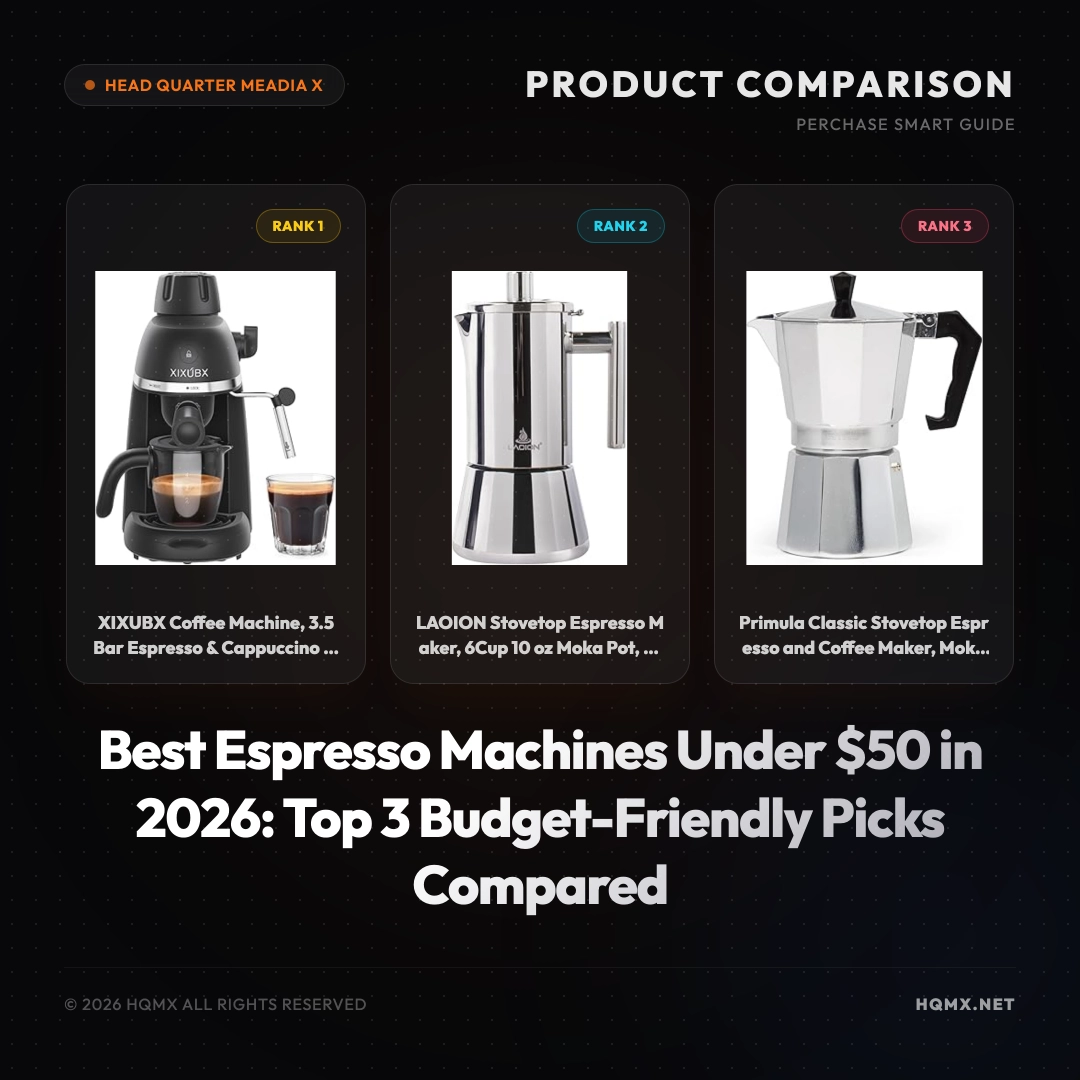
| Feature | XIXUBX Coffee Machine (Analysis 1) | LAOION Stovetop Espresso Maker (Analysis 2) | Primula Classic Stovetop Espresso Maker (Analysis 3) |
|---------|-------------------------------|----------------------------------------|-------------------------------------------------|
| MSRP | $49.99 | $45.99 | $15.99 |
| User Score | 4.5 | 4.5 | 4.5 |
| Type | Electric Espresso Machine | Stovetop Moka Pot | Stovetop Moka Pot |
| Capacity | 2 cups (with Tritan cups) | 6 cups (10 oz) | 6 cups |
| Pressure | 3.5 Bar | N/A (stovetop) | N/A (stovetop) |
| Material | Plastic/BPA-free Tritan | Stainless Steel | Aluminum |
| Dimensions | Compact (exact TBD) | Approx. 6.5 x 4.5 x 8 inches | Approx. 6 x 4.5 x 7.5 inches |
| Weight | Lightweight | ~1.5 lbs | ~0.8 lbs |
Buyer's Guide: Choosing an Espresso Machine
Before comparing specific models, understand the core technical factors that determine espresso quality. These principles apply regardless of brand or MSRP point.
Pump Type & Pressure Stability The pump is the heart of every espresso machine. Vibration pumps (common under 1,000+) deliver smoother, more consistent pressure profiles. The industry standard for espresso extraction is 9 bar — machines advertising 15 or 20 bar often measure peak pump capacity, not brewing pressure. An over-pressure valve (OPV) regulates this to 9 bar at the group head.
Boiler Architecture & Temperature Stability Single boiler machines share one boiler for brewing and steaming, requiring temperature switching (surfing) between functions. Heat exchanger (HX) machines use a copper tube inside a steam boiler to flash-heat brew water, enabling simultaneous brew/steam but requiring cooling flushes. Dual boiler machines maintain independent, PID-controlled boilers for brewing and steaming — the gold standard for temperature stability and workflow.
Pre-infusion & Pressure Profiling Pre-infusion gently wets the coffee puck at low pressure (2-4 bar) before full pressure ramp-up. This reduces channeling and improves extraction uniformity. Advanced machines offer programmable pressure profiling — varying pressure during the shot (e.g., declining pressure profiles) to highlight specific flavor characteristics.
Build Materials & Serviceability Stainless steel boilers resist scale better than brass/aluminum. Commercial-grade components (E61 group head, saturated group) improve thermal stability. Consider parts availability and community support for long-term ownership.
Analysis 1: XIXUBX Coffee Machine, 3.5 Bar Espresso & Cappuccino Machine with Steam Wand
Technical Key Specificationss
The XIXUBX Coffee Machine is a compact electric espresso maker with a 3.5 Bar pump pressure system, ideal for extracting rich espresso shots. It features a steam wand for frothing milk, allowing you to make lattes and cappuccinos. The machine comes with two BPA-free Tritan cups and a safety lock mechanism that prevents operation unless properly closed. It has an 800W heating element, which heats water quickly. The water tank is removable and has a capacity of approximately 240ml (enough for two espressos). The machine uses a simple thermoblock boiler design, ensuring consistent temperature. Dimensions are roughly 11.8 x 6.3 x 9.8 inches, and it weighs about 4.2 pounds. The black finish gives it a modern look.
Why This Analysis
This is the best all-in-one electric espresso machine under $50. It offers a true espresso experience with a steam wand, which is rare at this MSRP. The safety lock and included Tritan cups add convenience and value. Perfect for beginners or those with limited counter space who want versatility without the cost of larger machines.
Strengths and Limitations
- Strengths: Affordable electric espresso with steam wand; compact footprint; safety lock; includes reusable cups; easy to use.
- Limitations: 3.5 Bar pressure is lower than prosumer machines (typically 9 Bar); plastic build may feel less durable; small water tank requires frequent refills; steam wand performance is basic.
Analysis 2: LAOION Stovetop Espresso Maker, 6Cup 10 oz Moka Pot
Technical Key Specificationss
The LAOION Stovetop Espresso Maker is a 6-cup (10 oz) moka pot made from high-quality 18/8 stainless steel. It is compatible with all stovetops including induction, gas, electric, and ceramic. The pot features a polished exterior and a heat-resistant handle. The brewing chamber uses the classic moka pot principle: water is heated in the bottom chamber, creating pressure that forces steam through coffee grounds into the upper chamber. It produces strong, concentrated coffee similar to espresso but not true espresso (no crema). The pot measures approximately 6.5 x 4.5 x 8 inches and weighs around 1.5 pounds. It comes with a silicone gasket and a metal filter.
Why This Analysis
This moka pot stands out for its stainless steel construction, which is more durable and induction-compatible than aluminum alternatives. It's perfect for those who enjoy traditional Italian or Cuban coffee. The 6-cup size is great for sharing, and it's a reliable, no-electricity-needed option for travel or home.
Strengths and Limitations
- Strengths: Durable stainless steel; induction compatible; large capacity (6 cups); no electricity needed; classic design; easy to clean.
- Limitations: Not true espresso (no crema); requires a stovetop; learning curve to avoid bitterness; handle can get hot; gasket may need replacement over time.
Analysis 3: Primula Classic Stovetop Espresso and Coffee Maker, Moka Pot
Technical Key Specificationss
The Primula Classic Stovetop Espresso Maker is a 6-cup aluminum moka pot. It is designed for use on gas and electric stovetops (not induction). The pot has a classic silver finish with a black plastic handle and knob. It brews by geneUser Score steam pressure from boiling water in the lower chamber, which passes through a basket of fine coffee grounds and into the upper chamber. The result is a strong, bold coffee concentrate. Dimensions are approximately 6 x 4.5 x 7.5 inches, and it weighs about 0.8 pounds. It includes a safety valve and a rubber gasket.
Why This Analysis
This is the most budget-friendly option at under $16, yet it still delivers excellent coffee. It's lightweight and simple to use, making it ideal for students, travelers, or anyone wanting an authentic stovetop espresso experience without spending much. The 6-cup size is perfect for small households.
Strengths and Limitations
- Strengths: Extremely affordable; lightweight; makes strong coffee; easy to use; classic design; good for travel.
- Limitations: Aluminum may react with acidic coffee (some taste concerns); not induction compatible; handle can get hot; no crema; requires careful heat control to avoid bitterness.
Conclusion
Choosing the best espresso machine under $50 depends on your lifestyle. If you want a true electric espresso maker with a steam wand for milk-based drinks, go with the XIXUBX Coffee Machine (Analysis 1) – it's the most versatile for lattes and cappuccinos. If you prefer a durable, induction-compatible stovetop pot for strong black coffee or Cuban-style cafecito, the LAOION (Analysis 2) is your best bet. And if you're on the tightest budget or need a lightweight, no-fuss option, the Primula (Analysis 3) delivers unbeatable value. All three are top-rated and will satisfy your coffee cravings without breaking the bank.